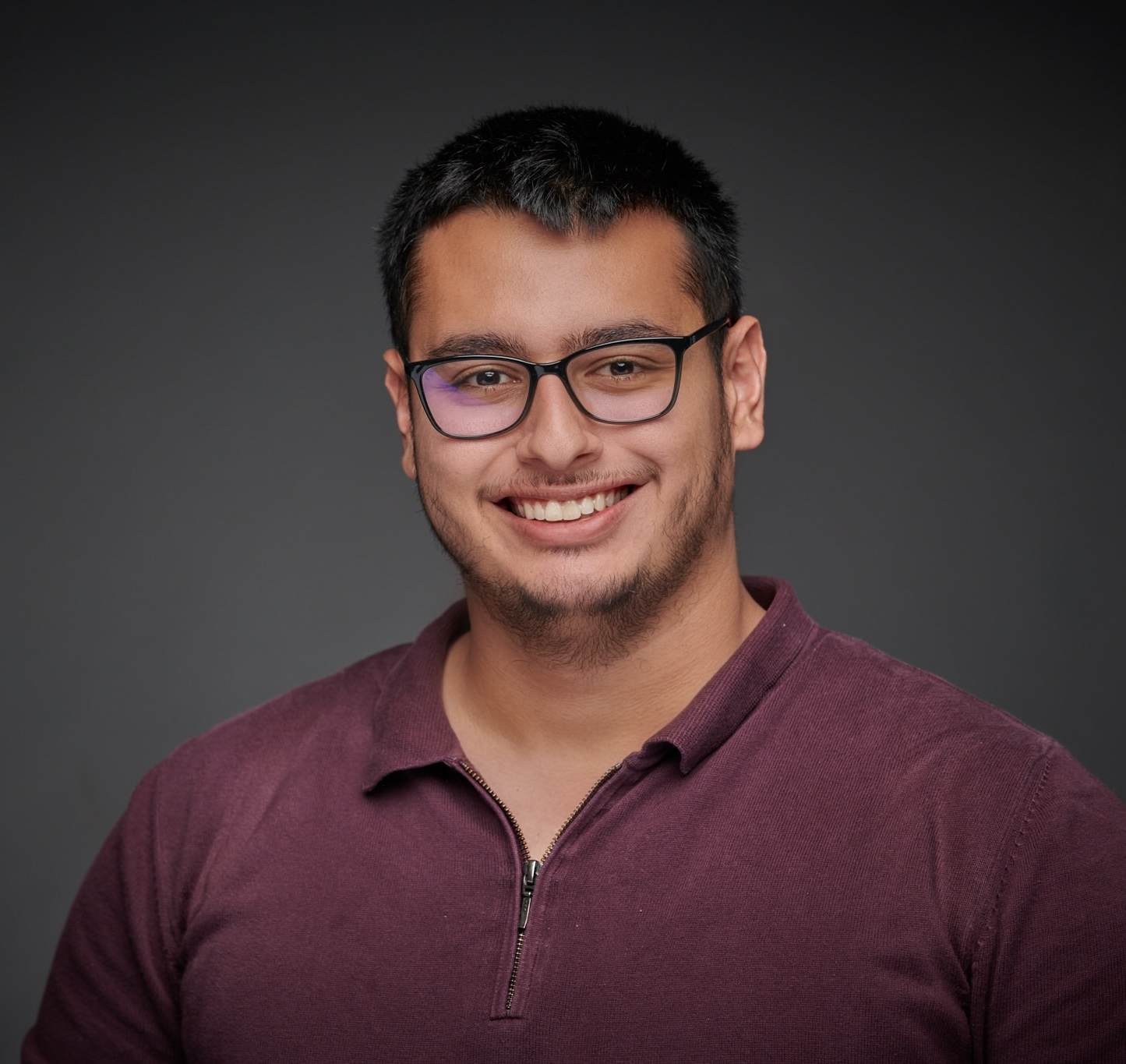
Arda Sahin
- University of California, Los Angeles
- Ph.D. Candidate
- Geotechnical Earthquake Engineering Researcher


Advisors: Prof. Jonathan P. Stewart and Prof. Scott J. Brandenberg
-
I am a Ph.D. candidate in Geotechnical Earthquake Engineering at UCLA. My research focuses on liquefaction susceptibility, triggering, and lateral spreading, with an emphasis on curated geotechnical databases and probabilistic, data-driven hazard models developed as part of the Next Generation Liquefaction (NGL) project. During my M.S. studies at Middle East Technical University, I worked on liquefaction triggering of gravelly soils. Before graduate school, I worked as a Geotechnical Design Engineer.
-
I have taken part in post-event reconnaissance after the 2023 Türkiye earthquake sequence and the 2025 Los Angeles wildfires. I am also passionate about teaching and mentoring: I have served as a teaching assistant for soil mechanics, laboratory, and foundation engineering courses at UCLA and METU, and I mentor undergraduate researchers working on new liquefaction case histories.
-
Research interests: geotechnical earthquake engineering; liquefaction susceptibility, triggering, and lateral spreading; probabilistic and data-driven hazard models; curated geotechnical databases; post-event reconnaissance and site characterization; climate-informed multi-hazard geotechnical risk.
Contact Information
3771 Boelter Hall
Department of Civil and Environmental Engineering
University of California, Los Angeles, CA 90095
Education
-
Ph.D. in Geotechnical Earthquake Engineering (2023 – Expected March 2027)
University of California, Los Angeles
Advisors: Prof. Jonathan P. Stewart and Prof. Scott J. Brandenberg
Dissertation: Data Interpretation and Modeling for the Next Generation of Liquefaction Susceptibility Characterization
-
M.S. in Geotechnical Earthquake Engineering (2021 – 2023)
Middle East Technical University, Ankara, Türkiye
Advisor: Prof. Kemal Önder Çetin
Thesis: The Assessment of Seismic Liquefaction Triggering of Gravelly Soils
-
B.S. in Civil Engineering (2016 – 2021)
Middle East Technical University, Ankara, Türkiye
Experience
-
Graduate Student Researcher (2023 – Present)
UCLA Samueli Civil and Environmental Engineering Department
-
Teaching Assistant (2024 – Present)
UCLA Samueli Civil and Environmental Engineering Department
- C&EE 120 Principles of Soil Mechanics (Fall 2024, Fall 2026)
- C&EE 120L Soil Mechanics Laboratory (Winter 2025)
- C&EE 121 Design of Foundations and Earth Structures (Winter 2026)
-
Research Assistant (2022 – 2023)
METU Civil Engineering Department, Geotechnical Engineering Division
-
Teaching Assistant (2022 – 2023)
METU Civil Engineering Department, Geotechnical Engineering Division
- CE363 Soil Mechanics for Civil Engineers (Fall 2022, Spring 2023)
- CE364 Soil Mechanics for Geology and Environmental Engineers (Spring 2023)
- CE366 Foundation Engineering I (Spring 2023)
- CE486 Geotechnical Design (Fall 2022)
-
Geotechnical Design Engineer (2021 – 2022)
GeoDestek LLC, Ankara, Türkiye
- Evaluated slope stability and designed soil nail systems, with anchorages where necessary
- Designed shallow and deep foundations and ground improvement for settlement and bearing capacity
- Performed site response and liquefaction analyses
Honors and Awards
Kenneth L. Lee Fellowship, UCLA (2026)
Fellowship by Turkish Ministry of National Education (2022 – 2026)
M.S. High Honor Graduate, Middle East Technical University (2023)
B.S. High Honor Graduate, Middle East Technical University, ranked 2nd out of 337 students (2021)
Service
Editorial Board Member, Next Generation Liquefaction (NGL) Project (2025 – Present)
GEER Reconnaissance Team Member, 2025 Los Angeles Wildfires (Pacific Palisades)
Reviewer: Earthquake Spectra (2025), Geotechnical Frontiers 2025 (2024), Geo-Congress 2024 (2023)
Student Member, Earthquake Engineering Research Institute (EERI) (2025 – Present)
Student Member, American Society of Civil Engineers (ASCE) (2024 – Present)
Research
-
As part of my Ph.D. studies at UCLA, advised by Prof. Jonathan P. Stewart and Prof. Scott J. Brandenberg, I work on the liquefaction susceptibility and cyclic strength of fine-grained soils. As a graduate student researcher on the Next Generation Liquefaction (NGL) susceptibility team, I quantify and assess cyclic laboratory tests performed on fine-grained soils, with a focus on transitional soils that can exhibit either "clay-like" or "sand-like" behavior. The distinction matters because the cyclic strengths associated with the two behaviors differ substantially, and misclassification can lead engineers to under- or over-design structures for seismic loading. I am also developing lateral spreading models using the NGL database.
-
For my M.S. studies at Middle East Technical University (METU), advised by Prof. Kemal Önder Çetin, I investigated the liquefaction triggering of gravelly soils. I compiled a database of case histories from past earthquakes in which gravelly soils showed surface manifestations of liquefaction, and used it to develop a probabilistic triggering model.
-
On February 6, 2023, two earthquakes with magnitudes of 7.8 and 7.6 struck southeastern Türkiye. As a member of both the METU and GEER teams, I visited the affected region multiple times for reconnaissance, collecting samples, documenting surface manifestations, and measuring settlements and lateral spreading displacements.
Research Projects
-
Next Generation Liquefaction Project Database and Model Development in Support of Improved Liquefaction Hazard Assessments (2024 – Expected 2029)
U.S. Federal Highway Administration (FHWA)
Principal Investigators (PIs): Dr. Kristin J. Ulmer (SwRI), Prof. Jonathan P. Stewart (UCLA), Prof. Armin W. Stuedlein (OSU)
Co-PIs: Dr. John Stamatakos (SwRI), Prof. Scott J. Brandenberg (UCLA), Prof. T. Matthew Evans (OSU)
Participating Institutions: Southwest Research Institute; University of California, Los Angeles; Oregon State University; University of Washington (Prof. Steven L. Kramer)
- Developing probabilistic liquefaction susceptibility models from the NGL database as the first step of seismic ground failure hazard assessment
- Quantified hysteresis loop metrics to distinguish sand-like and clay-like behavior under cyclic loading
- Developed a web form (HTML, CSS, and JavaScript) to collect expert opinions on sand-like versus clay-like behavior for a subset of tests
- Related the expert opinions to the hysteresis loop metrics to build a framework for objectively assessing the full NGL database
- Developed a Bayesian inference framework to estimate soil behavior from hysteresis loop metrics while accounting for uncertainty in expert judgments
- Created an interactive Python/ipywidgets tool to access cyclic test data, compute hysteresis loop metrics, and visualize the results
- Evaluated all cyclic test results in the NGL database and created a protocol for identifying tests usable in liquefaction susceptibility assessment
- Relating liquefaction susceptibility to common index parameters, such as Atterberg limits, that are available in nearly all geotechnical projects
- Correlating liquefaction susceptibility with Cone Penetration Test (CPT) results to form a separate model, giving practicing engineers flexibility to use the most reliable data available for their project
- Co-authored two interim reports to FHWA summarizing the findings with the participating institutions
-
Evaluation of Simplified Procedures for Estimating Lateral Spreading (2025 – Expected 2027)
California Department of Transportation (Caltrans)
Principal Investigator (PI): Prof. Scott J. Brandenberg
- Developing lateral spreading models using the NGL database, considering geotechnical and geomorphological features
-
Next Generation Liquefaction Susceptibility Database and Modeling (2023 – 2025)
Pacific Earthquake Engineering Research (PEER) Center
Principal Investigator (PI): Prof. Jonathan P. Stewart
Co-PI: Prof. Scott J. Brandenberg
Participating Institutions: University of California, Los Angeles; Oregon State University (Prof. Armin W. Stuedlein, Dr. Amalesh Jana)
- Expanded the NGL database with cyclic laboratory, in situ, and index test data to address needs identified at the 2022 PEER Workshop held at Oregon State University (OSU)
- Traveled to Houston, TX, to gather key data used to develop a legacy liquefaction susceptibility model
- Coordinated with research groups at OSU, UC Berkeley, and UC Davis and with geotechnical engineering firms including Geosyntec and ENGEO
- Created and published DesignSafe datasets of site investigation and cyclic laboratory test results to make the data publicly available to the geotechnical engineering community
- Entered the gathered datasets into the NGL database so they can be easily queried using SQL
- Identified issues and missing input entries in the NGL database structure to guide future reorganization and redesign
- Created a logic tree framework for seismic ground failure hazard assessment and illustrated it with a case history from the 1999 Kocaeli earthquake
-
Effect of Fines on Liquefaction Triggering Analyses (2024 – 2025)
California Department of Transportation (Caltrans)
Principal Investigator (PI): Prof. Scott J. Brandenberg
- Developed a framework that separates the effects of fines content on penetration resistance and cyclic resistance
- Co-authored Caltrans Report CA25-4418
-
RAPID: Geotechnical Engineering and Geo-Sciences Response to the 6 February 2023 Türkiye Earthquake Sequence (2023 – 2025)
U.S. National Science Foundation (NSF)
Principal Investigator (PI): Prof. Jonathan P. Stewart
Participating Institutions: University of California, Los Angeles; California Polytechnic State University (Prof. Robb Eric S. Moss); Middle East Technical University (Prof. Kemal Önder Çetin); California State University, Fullerton (Prof. Sinan Akciz)
- Performed site investigations at locations where reconnaissance teams reported surface manifestations and at strong-motion stations, to estimate the effect of soil profiles on the amplification or de-amplification of ground motions
- Summarized the data and published it through DesignSafe to make it publicly available and advance the state of practice
- Compared site investigations at strong-motion stations with available models to identify their shortcomings, and added the data to the databases used to develop newer model versions
- Performed liquefaction assessments with the new site investigation data using legacy models and the NGL triggering model to test their applicability and performance
- Developed complete case histories, from reconnaissance through site investigation, for DesignSafe and the NGL database
- Mentored two undergraduate researchers (C&EE 199 directed research and summer research) developing new liquefaction case histories from the 2023 Türkiye earthquakes
- Co-authored a report to NSF summarizing the findings with the participating institutions
-
Reconnaissance after the February 6, 2023 Türkiye Earthquake Sequence (2023)
Geotechnical Extreme Events Reconnaissance (GEER) Association
Coordinators: Prof. Kemal Önder Çetin (METU), Prof. Jonathan D. Bray (UC Berkeley), Prof. J. David Frost (Georgia Tech), Prof. Robb Eric S. Moss (Cal Poly), Prof. Jonathan P. Stewart (UCLA)
Participating Institutions: Middle East Technical University; California Polytechnic State University; Georgia Institute of Technology; Southwest Research Institute; University of California, Berkeley; Portland State University; Ohio State University; University of California, Los Angeles
- Visited the affected region after the February 6, 2023 earthquakes, one of the most significant earthquake sequences of the past decade
- Joined field teams from Middle East Technical University and Gazi University, followed by GEER teams that visited the region in three phases from mid-February to the end of March
- Evaluated the performance of support systems, dams, bridges, lifelines, ports, and buildings affected by seismic ground failure, to inform future data collection, model testing, and model development
- Collected soil ejecta samples to classify the soils that liquefied during the earthquakes
- Measured excessive building settlements and lateral spreading displacements at port facilities, bridges, and dams
- Thoroughly investigated two port facilities, one with and one without surface manifestations, to develop a complete case history published in a journal paper
- Helped prepare reconnaissance reports for the Turkish research teams and GEER
Conference Presentations
-
- Next Generation Liquefaction Susceptibility Database and Modeling (Oral)
13th U.S. National Conference on Earthquake Engineering (13NCEE), Portland, OR, July 2026 - Site Characterization for Selected Liquefaction Case History Sites from February 6, 2023, Türkiye-Kahramanmaras Earthquakes (Oral)
Geo-Congress 2026, Salt Lake City, UT, March 2026 - Quantitative Soil Behavior Type Assessment from Cyclic Test Results (Poster)
Geo-Congress 2026, Salt Lake City, UT, March 2026 - Visualization of the Laboratory Test Data in the NGL Database (Special Session Talk)
Geo-Congress 2026, Salt Lake City, UT, March 2026 - Next Generation Liquefaction Susceptibility Database and Modeling (Oral)
2025 PEER Workshop, San Francisco, CA, August 2025 - Application of Liquefaction Susceptibility Criteria within a Logic Tree Framework (Poster)
2025 SoCal CEE Research Symposium, Irvine, CA, April 2025 - Application of Liquefaction Susceptibility Criteria within a Logic Tree Framework (Oral)
2025 PEER Annual Meeting, San Francisco, CA, March 2025 - Next Generation Liquefaction Laboratory Database for Susceptibility and Cyclic Strength Assessment (Oral)
Geotechnical Frontiers 2025, Louisville, KY, March 2025 - Seismic Soil Liquefaction Triggering Assessment of Gravelly Soil Case Histories (Poster)
Geo-Congress 2024, Vancouver, BC, February 2024
- Next Generation Liquefaction Susceptibility Database and Modeling (Oral)